Friday, April 08, 2011

Look at me


Saifee Hospital. Charni Road. Mumbai
Blinding Brightness / Longest building in Mumbai
Architect: Hafeez Contractor.
Lighting: ?
Interior: ?
Structural Consultant: ?
Area: ?
Earlier, they had multicoloured rainbow lights

Thursday, April 07, 2011

Strangeness

I felt immense strangeness as I re-entered my class today. I felt like a stranger. Those faces that I saw for 9 months - why did they all appear new? The feeling was exactly like that on the first day in this class. Did I mentally decide to not look back at time? What had changed? Was there a breach of relationship? Was there a relationship in the first place?

Atul asked me the other day: "Have they all disappeared?" - as if it was a give and take thing all this while? I remember; that day when I put the final list: they yelled, cried, were overjoyed, some disappointed. Immediately that time, some did come to me to talk, and perhaps I was not in a frame of mind to talk. I gave them monosyllabic answers. Why? Because I know they still need to work so hard. And I felt incomplete, since my objectives weren't achieved. But I keep telling myself: "You tried." Although it does not satisfy me.

Going back to the question of exchange - was this such a give and take? Give submissions take marks, and get out! But even I don't remember going back to my class coordinator ever. But I think that's how it is. I am unnecessarily thinking too much about it. Yes, why should I be taking it so seriously. May be it comes from this utopic mission to bring a change. And who has ever changed any thing? And why do I think I can change! These are all things stemming from my idealism. I have to detail it out!

But this strangeness was disturbing. Why did I need to feel comfortable? Why the hell did I want to feel at ease? Did it really make any difference to anyone of that last week of immense negotiation?

There are more important things to do. Focus Anuj. May be that was my initial year with such an intense full-time engagement. Regulate it. And I keep talking to my mind. It's almost this alternative person. He always seems more logical, more right, more balanced, more strong...I wish I could be like him.

(this post has been edited on 8th April 2011)

Sunday, April 03, 2011

Synecdoche

INDIA won the WORLD CUP 2011.

Synecdoche:
It's a figure of speech which is used to refer a part of the whole of a whole of the part.

People danced naked on the streets and shouted slogans. They took out their cars and burst crackers. In the last week, strangers sitting next to you in buses or trains asked you match statuses while you were still listening to your good old collection of songs. When you answered "pata nahi" to their match related question, they would shrug their shoulders. They were peeping into tiny shopfronts having ultra-mini TV screens in queues to watch the "HOW" of cricket. How does he hit the ball, or take the run or take a wicket...it's about the how - and you enjoy it only if you understand the game. Just like the classical music. My brother clapped sitting in the living room peeping at the wall where he projected the world cup through a rented projector (to feel in the stadium) - and I felt as if it was his classical Indian music. Most cricket fans in India are this crazy. They critique the team at every ball such that it feels like a reality show! (how about if each move of the game was to be decided by an audience poll!). But invariably, if you found your palms hitting each other when the team won, you just echoed that "I am an Indian and I am proud that India won".

Event: 
That is what you require to activate a space. Events are essential for interaction. Can architecture be eventful? Then the building has to perform. It has to be performative. Ever changing, ever evolving / devolving. The cricket stadium holds a mass through an event. The theatre holds an audience through a virtual event. The rallies are held through speeches. Something that hold such a great mass together is actually all non-physical. The game, the show or the speech. Architecture is just a by product. It helps in encompassing the void - the hollow that holds the event. 

Architecture is the manifestation of synecdoches. part for whole / whole for part...

Out of 'Practice'

While working on a project that I am handling after a long time today, I realised that I have become tremendously slow at AutoCAD, and that I am slowly starting to just not like doing all this. I can think designs, sketch, but drafting on CAD is like hell. I just wondered only if I had an assistant, I could just sketch and tell someone to make the changes on the computer. Gone are the days when I would be on toes and do the finer changes jhatpat! I also have forgotten so much on Sketchup!! And I am feeling terrible about it!
Atleast practice keeps you up with your skill-speed, especially when you are skilled! But on the other hand, my typing speed has increased tremendously. I learnt typing from a typing institute after my 10th standard.

Typewriter fascinated me, more so, the sound and the tension on the keys. That's what I joined the class for. To feel the typewriter. I never learnt typing the right way. The right way is to look at the paper (where you read from to type in) and the fingers on the keys. I always kept looking at the keys while typing. After all, i wanted to see the mechanism of each printed word. Something going up when i pressed the key down - hitting the black ribbon and printing the letter - it had so much of character! The black south indian lady who was the supervisor would keep telling me: "idhar nahi dekhneka" - after she went, i again gazed at the lovely machine. Due to this, I never learnt the right way to type. As years passed by, I have learnt to correctly look in the paper and type - perhaps computer as a machine is not as fascinating as the typewriter. The keyboard is a softer interface though; as compared to the typewriter. It's too passive. I liked the older keyboards which made noise (tik tik tik), the sound made you realize how well you typed. Now they have all added these silencing devices to them, so you dont hear anything.

But well, AutoCAD has gone 6 years forward from where I started and it has become as complicated or organized as MS Office 2007. Sometimes I feel scared if I will be left behind. But may be this is a question of what I consciously want to prioritize...

Saturday, April 02, 2011

Design Methods

They crave for a method. And there are very few who can teach methodologies for design.  What methods do is that they allow form-al, spatial, structural, etc. progress of design logically. Design methods can be debated (unlike designs, where personal opinions come into picture). But that's the catch - methods are a very "modern" way of working. But it might be interesting to get different structures of thought from the modern thought itself.

Design methods doesnot figure anywhere in the curriculum of architecture.  "Criticism" has been a popular way of learning design at Academy of Architecture. Somehow, the reality of practice and the ability to handle it gives the alumni of the college a lot of confidence. But we need only some one to tell them how badly most of them do it!

Academic practice can be far more rigorous if we discuss academic issues instead of the practical. The practice is all for materializing the ideas. But the academic space needs to inculcate into students how to handle ideas and let them be produced. Meanwhile, we only have black squares towering up the sky. Design methods can help breaking the monotony.


(above: placing planes that indicate movement in the site owing to interests of view, climate, function and regulating their spacing and height through logic of circulation and context. The design ended up quite differently, but at the end, there was a reasoning for everything that was placed on the site)

Thursday, March 31, 2011

Grids of the Grocer


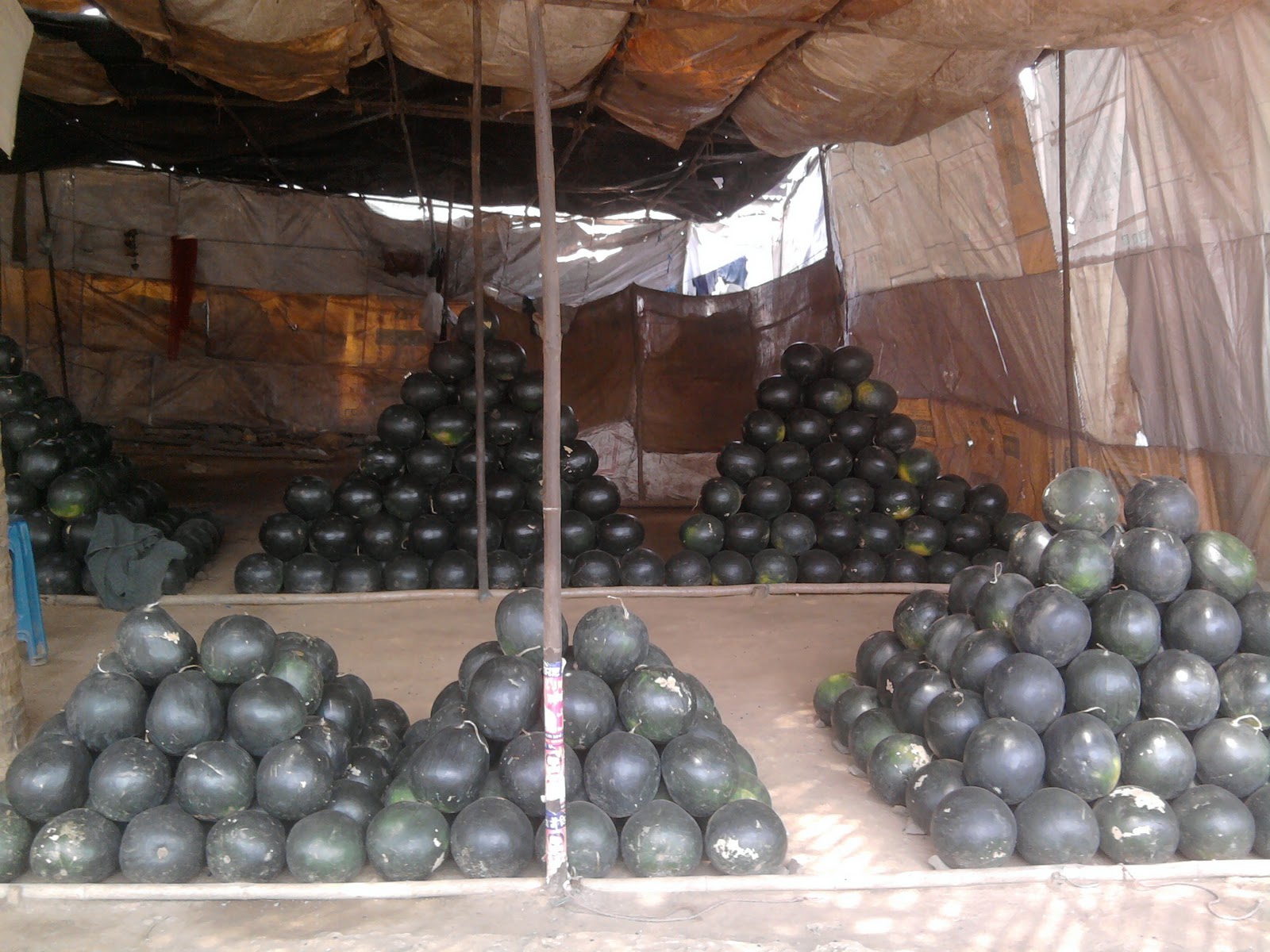
It's not only architects or artists who deal with geometries. Geometry I think is a part of every person. When I mention geometry, I am referring to complex patterns that are made out of basic shapes. While walking across the streets everyday, I look at how vegetable vendors arrange their pyramids of tomatoes, gingers, apples or other fruits. How neatly they make bundles of chillies, gingers, spinach in a grid. How nicely, the flower vendors make groups of a handful (palm-ful) of orange flowers and cap them with a red one. How they arrange the stack of leaves overlapping each other...

I wonder how the people who make the cane baskets make a multitude of shapes out of a single thread of cane...its like a complex structure of geometry used very simply. Looking at hats, baskets, containers all made out of basic long cane, I was surprised with the intensity with which they engage with an object (which is an everyday object for them). Bamboos, and the ways they cut it to make classes, cups, boxes and a range of other products...Wires - the way they shape it up into cycles, cars, trains, etc - or plastics, take anything. There is so much of it.

On one hand, where geometry is organizational (in the way of the grid) its also something that they structure their lives around.  It is also that they make into a structure (an object). Craft is thus important. It makes you realize of what you can do with objects, and how you can build on to them.

however, what i really like is that inspite of a rigid grid, the gingers are irregular. Inspite of the unstable rolling round tomato, it makes one of the most stable structure of the pyramid!! how interesing. They do it with a lot of love, in the heat of the sun, only waiting for all those pyramids to disappear at the end of the day! A basket of things to play - keep arranging, refilling their mats -the chickoos, the bananas...how they make the most interesting patterns.

Do they do it as a pass time? Or do they create an aesthetic of display? Does it appeal to people to see shining jaamuns as a regularised mountain of equal units? Making a mountain out of watermelons - and cutting a pyramidal cone out of it only to tuck it back in its profiled section? all of it suggests so much of articulation. I think we could learn from how these people deal with geometries...For articulation, for resolution, for finding ways of economising space, for finding out how spaces in-between are created, how colours interact... all of that.
And this only came up more strongly when I sat over a student's drawings resolving his circular space structure...if only he could inform him more with things around....

err...

But i would have almost missed the point...How does the grid so naturally come to the vegetable vendor? Sometimes I wonder how would Descartes react to this!? How would Euclid react to such natural instinct of making pyramids of papayas? And was the grid practised before it was discovered? Is the cartesian grid primordial? Perhaps questions which have been answered...i could just re-thread it...