Spatial Structure of Poetry

Saturday, February 25, 2012


(above image from the blogpost  "A story in waiting" on dagagiri dated Nov. 29, 2008)

The trickling water
From the air conditioner pipe
A sparrow gulps down.

(an attempt at Haiku, Anuj Daga)

***

Poetry essentially consists of fractured statements. The empty space between the word-constructions allow for new grammars to configure. It is the suspended grammar that perhaps makes space for new.imagination to take place. The emptiness sometimes brings two stranger words / ideas close together allowing us to.see different dimensions of existing worlds.

If consecutive words of a dictionary were to be read as a sentence, they would give us a great way to look at the landscape of words and meanings. Since if we consider that the dictionary is the modernist way of word family structures, consecutive words in a dictionary are neighbours belonging to a same family - in terms of physical characteristics, the alphabets (genes) they are constructed out of; the pronunciations of syllables (body parts), etc. However, their ages may be different with regard to their etymologies and they may have different meanings, functions and behaviours.

Such a landscape of words may become an extremely interesting investigation. Poetry is thus a landscape of words, creating new meanings and relies on the readers' potential to be able to make sense if such landscape for the interpretation of the real existing world. If architecture was poetry, it could possibly be very postmodern...bringing together different ideas and symbols together. But then there is rhythm, rhyme and spatial experience too at play. This would mean finding meaning into the empty spaces, pauses or fractures between words of a poetry.

Charles Correa Gold Medal 2012

The Charles Correa Gold Medal 2012 was not awarded to any one.

I had a similar strange feeling yesterday as I took a round after all students pinned up their work. (Being the organizer of the event, one gets to see stuff before any one else, even jury gets to have a look!). As Prof. Punde inspected the room over the evening asking for a good panel to look at, I exclaimed "None!" - Adding further, "One year, they must just not give the gold medal to any one..." To my surprise, I actually found my evaluation was correct! Not only that, my instincts of notable panels was also right - they same 3 panels I thought (exactly those) were cited! Wonder what this meant!

One can clearly point out where things go wrong for gold medal.

1. The fad to compose larger and large (bed)sheets, which students are incapable to compose efficiently, ends up making them hoardings rather than architectural sheets

2. Overly rendered drawings, too many colours, background, flashy views are an eye sore.

3. Panels filled with overflowing essays of analysis. Writeups that flow in every blank inch of space.

4. Pictures like wedding albums, sprinkled all over the analysis panels or design sheets.

5. Unclear drawings, obnoxiously large, pixelated, unoriented, mixing into each other.

6. Non-contextual, irrationally large urban design projects thinking of them to be urban inserts. (a flaw on the part of universities which expect large thesis projects so that students are able to display their skills in all aspects of architecture)

7. Misplaced aesthetic sensibilities - in design, layout (of sheets) and presentation.

And one could probably go on.

The 3 citations, two from KRVIA and another from Bharati Vidyapeeth seemed interesting. I remember pointing out to Punde Sir about Marsha's thesis (KRV: Resonant Memories) that although the panel is poetic, I had serious questions about the program (which was the typical library, exhibition, etc.) - and the jury did pointed that along with circulation issues. I also felt the project layout did not fit in the countour layout well. The jury did appreciate the water colour drawings, that forced me to bring Punde Sir to have a look at it. (Ok, I must clarify I wasn't with the jury, and it was a closed room affair!). The Modern Temple (Dipti, BVP) was well articulated and I knew it was challenging, but it ended up in the shikhara! One would try to look at what Frank Llyod Wright did to Unity temple, which was the first 'modern' church as compared to the classical imagery of the church, in analysing what is a 'modern' form. I did not particularly keenly see the third entry (Nupoor, KRV). It seemed interesting in the way it was composed.

Out of the 21 entries that were received, none of them, the jury felt, lived up to the brief offered to them. They decided to award none on the grounds that, "it would be unfair to the earlier winners who had put in much more hard work" and because they "need to maintain the standards of the Charles Correa Gold Medal" (Kamu Iyer).

Prof. Hazra pointed out very sensitively that "it seemed that many projects were almost there, had there been a little more guidance, would there be really interesting projects". He also candidly expressed that one involuntarily gets into a mode of comparison with the projects that have earlier received the Gold Medal, which seemed much promising. The entries this time only lacked visual communication skills, presentation of analysis and lack of design resolution.

Charles Correa concluded saying that "You all look very disappointed, but that does not mean that you did not put in hard work. All of you have put in a lot of effort, but don't be disappointed since it's a part of life. There will be so many times when clients will not like your design and you will have to start all over again...you all must try and put in your design intent more clearly..."

Students huddled him up as he left the premises - they discussed issues, ideas and what went wrong. After all, Charles Correa still remains a figure in Indian architecture to catch a memorable glimpse of. I re-lived my three year old excitement seeing the students' pin drop silence in the auditorium. This decision only makes the Gold Medal more coveted and desirable, raising the already tall stature of Charles Correa.


Dil Chahta Hai

Monday, February 20, 2012

Bhankas on Nashik tour to Gauri's wedding with friends:

Dhaval ordered a paper dosa and it turned out to be exceptionally large. 
Atit: Didnt u mention the paper size? 

Richa: I can't eat the wada pav
Anuj: Why? 
Richa: Getting very heavy...
Anuj: Who? You? 

Constantly missing deadlines for Gauri's wedding function, alok had an idea (remembering college days' Gauri saying "lecture chalu hua toh missed call de") 
Alok: Lets ask Gauri to give us a missed call when she's to do the next event. 

Looking at a small aquarium at Nashik city centre overcrowded with fishes, I wondered if one could give them extra space to float.
Dhaval exclaimed, "it's SRA scheme"

In the sanctity of the Manas Hotel's cafe on the way to Nashik, we called for the waiter and said:
Dhaval: 6 teas
Waiter: ok
Dhaval: wait, do you have hot chocolate?
Waiter: yes
Dhaval: ok, them make it 5 teas and 1 hot chocolate
Waiter: ok
Anuj: wait, even I want to try it. Make it 4 teas and 2 hot chocolates
Waiter:  ok sir (starts going)
Manali: Even I dont mind it. Waiter, waiter (calling out). Make it 3 teas and 3 hot chocolates
We look at Richa, Ritu and Alok - ????
Ritu: No I want tea!
Waiter: (flustered) ok
All of us then remebered with the confused taste of chocolate milk aka exaggerated bournvita:
Anuj: Mujhe mera bachpan yaad aa gaya. Mummy aise hi bournvita deti thi.
Dhaval: abhi jaldi khatam kar
Anuj: Mummy bhi aise hi bolti thi
Manali: Mujhse khatam nahi hoga itna saara...
Anuj: Mai bhi aise hi bolta tha!


While getting to Gauri's wedding reception, it was election time and hence declared 'dry day' the next day in Nashik. We were very excited to try out wines at Sula vineyard in  Nashik. It would be open only till 8 30, with wine tasting only for that day. We debate to attend Sula or Gauri's funtion, since we are neck to neck with time. In the car:
Dhaval: Ok people fast, vote - sula or Gauri?
Manali: Sula
Anuj: I dont drink anyway, so Gauri
Richa: Gauri
Dhaval: Lets go to sula, what you say Ritu?
Ritu: well, we could go to Sula...
Alok: mujhe jana hai sula!! but let's got to gauri's wedding
Dhaval: oops! 3-all!
Anuj: Let's call up Gauri (the wedding girl) and ask : Gauri, Sula or wedding?
(burst of laughter)
We eventually pass off Sula to attend Gauri's function...


Hell is very badly done

Tuesday, February 14, 2012


Architectural Design // First Year


"Hell is very badly done" - Maxim Gorky

Alternatives for the above statement...by the first year students.

Cabinet of Curiosities


Graphics & Representation:

We are trying to open up worlds of the self through the construction of cabinet of curiosities - a concept used by the people involved in the knowledge production during the Enlightenment period, to store objects which couldnot be classified then into any branch of knowledge.

In our graphics class, we aim to reconstruct the self through these curious objects we collect and understand why they stayed with us for such long time and the way they become our extensions to represent ideas that we can not express through conventional means of communication. The unspoken and unexpressed aspects of our personalities take form through the objects we collect. Often filling up our cabinets, these curiosities allow us to dig further into our idiosyncrasies and the way we use them to cover up our insecurities, likes, dislikes or emotions.

Lets see where we go with this idea.

Modernity: An incomplete Project

I asked Pendse sir of the references made by many modern architects and critics on why they say that the modern project is incomplete. He answered in some ways.

One, he said that modern movement invented a lot of 'technology' but much of it remains to be explored yet. Secondly, many social theorists say that all possible forms of capitalism have yet not manifested. We are yet to see more social formations based on capitalism in our society.

I further asked him what is the 'post modern' doing then. He explained that people's belief in post modernism has gone down, and instead being replaced by post structuralism. What changes in the post-modern time is the philosophy of technology or the way in which technology is perceived in the post modern age. The emergence of quantum mechanics led or directed the post modern thought. Further the chaos theory challenged rationality.

Sandeep Pendse mentioned that even Marx accepted that rational thought is limited. That rationality has limits. These limits are opened up by theories like chaos theory. To further the project of modernity, he explained, that we still dont know what inventions like biotechnology, rooting from modern thought can achieve...

Socio cultural issues in Academic projects

These days Aniruddha (Mahale) and I keep poking fun at each other on being elitist - We keep blaming each other to be more elite (quite reverse Sarabhai v/s Sarabhai phenomenon). Not going much into the hows, I think we are just reacting to a situation where we end up interacting with extremely high class students and star kids!

However, such situations have compelled us to relook at our past and the kind of projects we did in our past. Chaitanya maintains that the profession of architecture can only cater to the elites. Architecture is a regimental profession, which orders / structures other peoples lives according to what architects think is right for the world. The great masters did that - and we enforce the students to think of the last detail, only following the Mies-an quote: "God is in Detail". We train students to think even of the hairpin that the client would put in order to suit the inhabited space.

Architecture sees the slums as a nuisance, the popular aesthetic as kitsch, the domestic decoration as middle-class and rejects ornament in its current modernist hangover. Infact, these are the most basic design sensibilities from where students develop a liking for design - for the aspirants, design is about decoration, arrangement and creativity. Most students come with a strong humble sensibility of the middle class. Architecture severely insults this sensibility, or at least it does not respect these or channel these as potential design drivers. However, I must caution myself here to be specific of my experiences and my college - Academy of Architecture, Mumbai.

I came to Academy of Architecture with a heavy creative cultural baggage - I learnt to 'create' things from my mother - she taught me how to make things out of waste, of giving domestic waste an aesthetic value, she taught me how to make rakhees, I saw her paint, embroider, knit - all of it that fascinated me. I came to the architecture with this 'creative' interest. The beginning of the course was interesting, but it took a weird cultural twist by the second year when we were introduced to Interior Design. I never understood the subject - I just couldnot comprehend the idea of laying out an interior. Coming from a background where a house was a collection of utilitarian objects, sprinkled with artistic pieces here and there, I wondered what to put in a large living room plan apart from a diwan and a TV case?

I never dined on a dining table - eating was still a family activity - circling in the living room where food was served turn by turn to all. There was no question of understanding the concept of a dining table / dining space. The bed was more importantly a storage object, than a sleeping one - to the extent where height didnot respond to anthropometrics, but to the height of objects to be stored / amount of material to be stored in the bed hollow. Cupboards were not about hangers, but about the safe vault and safety. Study table was always a dream - I never had one. It was only pillows which became the table when kept on my lap... In interior design, we were expected to 'design' for these 'everyday' activities. In my home, objects for these activities happened over a period of time - as and when my father could afford it - so we had a steel cupboard, a wheel table, then some teepoys, diwan later, bed even later... So all of them were incoherent (speaking from a designer aesthetic). Apparently, that is not what ID expected us to do. I struggled and struggled and wondered what I could 'design' in an interior space other than the life i lived.

We had projects like interpretation centre in the same year - a word that I had never heard of. Our faculty, in the guise of explaining the concept of an interpretation centre, ended up telling us the programs that we needed to provide. Later in the course we were expected to design large centres - a naturopathy centre for some people who would come to these places for a few weeks. As outings, we always stayed in dharamshalas (inns). This stretch of imagination from an inn to individual cottages was far too much to grasp then. Further in the course were were asked to design more elitist and polished projects -in the guise of 'large scale projects'.

One of the first questions the faculty asked our class: "So how many of you have been to a five star hotel?" (seems a very humble question, but the medium of writing doesnot allow me to explain the intonation / delivery of speech). The obvious well-to-do people raised hands. A huge bunch of us looked at each other - perplexed. A social class of students for whom, once a month food at a local restaurant was a luxury, were expected to think of being to a five star hotel. The professor continued to share more experiences of five stars while all of us kept drowning ourselves in an imagined bubble of shame. We were expected to visit such places as case studies - buildings which do not allow you in without shoes and shun you by your appearance. Convention centres, hotels, residential towers, townships - all kinds of projects which were then farfetched for a class of people like us to imagine.

I am perhaps trying to draw attention to the completely insensitive ways in which elitism was thrown upon students without understanding the socio cultural backgrounds we came from. I wonder what others thought when they were asked whether or not they had been to a five star hotel. Isn't it too personal and sharp a question that makes you conscious of your own social status? What socio-mental traumas does it create for all such people who are completely shy and may never be able to admit their insecurities due to their backgrounds? And for those who have never been to such places, how does the curriculum ever expect, in 3 months, a design which suits an elitist taste and works absolutely efficiently?

These are sensitive issues. The academia has to deal with them very carefully and study cultural patterns to be able to slowly open up students to various aspects of design, so that they do not hurt the cultural sentiments of students from socially sensitive backgrounds. The academics have to think and rethink of projects they give students to handle. In the fellowship I did with KRVIA after my graduation, I realized how   hegemonic design could be, and how soft, other systems are. We can creatively engage with these softer systems to be able to learn more about life in general instead of superimposing on ourselves a completely foreign order of living.

However, we face quite a reverse problem right now. We have a large set of elitist brats within whom a handful of people who can not afford quite many things have gotten embedded. These elitism reflects in the way the waste all kinds of resources, the general lack of concern for others, the tantrums they throw, the for-granted attitude towards their teachers, the stupid reasons they argue for, the lack of discipline - and i could go on!

However, when Aniruddha told me how he gave over all his architecture stationery to one of such 'embedded' students, I really felt touched. If only the elitist, instead of wasting resources helped their friends who can not afford luxuries that they tend to waste, it would make such a larger difference...

Of shrinking personal space

Wednesday, February 08, 2012

Two things that have subconsciously held me back from doing a lot of things that I would have liked to do are issues of space and lack of company. I have only come to realise about these two now - wonder why?

The issue of space clearey appeared to me when I realized how one of my professors invested in physical books. Involuntarily I asked him - where do you store them? But this question was in disguise an answer to my lack of productivity. Why don't I produce - physical models, installations, objects, craft - all things that I once engaged in so deeply, to an extent where this physical engagement with material and the skill to handle it gave me he confidence to pursue architecture. The answer is the limitation of space. If only i had the space to store books, the models, craft objects, installations that i made, would there be a drivr to create. Creativity is always physical - since you create. could one of the reasons for my switch over to a 'person of ideas' be because of the lack of physical space!? The space of ideas and the mind is limitless. It allows you to record, preserve and maintain your thoughts without external interference or objection.

My mother is always worried of storage - of all sorts of things that make up her domestic life, her dwelling. Her insecurity with this limited shrinking physical space has subconsciously taken over me. To avoid disturbances in the physical setting of my home, I have almost stopped te process of real creation. I donot like to discard my creations. I preserve them because they inspire me to make more. Logically this chain would result into accumulation of more and more physical stuff. I donot have any space to store them. Neither does my family understand my need to create an nor do they encourage me to make, since things that I make would occupy space. I shall have to soon find a way to overcome this nonforceful hegemony.

In the recent days I realized that while i went for so many talks, discussions, seminars in the past, those have reduced to barely a few now. Thinking over it, what makes the idea of attending academic events boring in the first place is the lack of company now. Earlier i had a group of friend amongst whom, someone or the other would be willing to join or vice versa. Gradually we started dispersing. After graduation, close friends went on to study abdoad, some got married, some got busy wih their jobs....this issue seemed to resolve itself when I made new friends with whom i almost set a new culture of engagement. Soon, they also moved away - for studies, work or found partners. Prasad shetty keeps pointing out very correctly perhaps - "he needs a partner". Sometimes I like to doubt him, but i know he is probably right. I have not being going out since i do not have any company to go out with, further i donot have people who share my kind of temperament to discuss my ideas wih. This has started having conssquences on my space of ideas too...

With shrinking physical and intellectual space, I feel choked. I must resolve these issues and come to a middle ground solution soon which shall free me of these things that are pulling me back. I must grow, only because I can. And i must find alternatives of growing too.

Rashomon

Monday, February 06, 2012

I finally saw Rashomon directed by Akiro Kurosawa, yesterday. I had heard so much about the film that the situation had come to an extent where i had the film with me and hadnt watched it for the longest of times. (there are hundreds of such films which i havent watched although i have them - all my kind of films, yet....perhaps it's the ease of the medium. Films communicate too easily and leaves very little room for imagination. It fills in rooms for image, music and text. A lot is already fed to the viewer. I like to struggle with a subject to form a conception.)

Rashomon seemed to be a dilapidated, vandalized, haunted Japanese gateway. It already revealed the brilliance of the director - a half broken gateway allowing itself to be fragmented, burnt and still 'used'. Standing erect in heavy rain, it provided shelter as well as ruined itself. What else could a building in this stage of its life do? In getting ruined, it told multiple stories of its situation.

The structure of the film was very much like 'Rashomon' - where either one tore it apart or imagined the wholeness of it. Both seemed impossible. While each character of the story tried to construct the reality of the film, the viewer is still left to wonder if here was a reality. I am reminded of Nietzche's comment on truth - "Truth is like a woman". Of course that is a very sexist statement. But the question he raises about th truthfulness of truth is something that could take form through a work like Rashomon.

Which reality do we believe and why should we believe any reality? We construct our own imaginations, amongst which, our life is one. Often suggesting sharp moral and ethical dilemmas of human nature in trying situations, rashomon constantly urges you to think , rethink your position. It invites you to make a judgement and yet stops you from arriving at a conclusion.

In the reality of life, we end up making conclusions. Our life is a construct of conclusions we make. History evaluates and reopens these conclusions taking us back into the acts. History presents to us the framework of events, like the semi built / semi dilapidated structure of rashomon, further complexified by the meaning and connotations given to it by the society. We are to make sense of it - a real one for iur real life. We have to either complete it or rip it apart piece by piece to be burnt in time.

Badran at Academy

Friday, February 03, 2012

Academy in a long time hasn’t had the privilege of having a person as renowned as Rasem Badran. The Jordanian architect was invited to share his thoughts on architecture for the Annual Lecture at the Academy. In our endeavour to work towards finding a language to deal with the issues of fast globalization and changing cultures, Badran’s lecture was appropriately themed ‘Tradition and Modernity’. It would be worthwhile to reconstruct the summary of the lecture through the conjunction of the title. ‘And’ signifies the temporal property of two things happening at the same time in Badran’s work. This is seen not only in his work, but the representation of his work too. Two questions that I must raise at the outset are: Does the technique of representation guide the kind of architecture we make? Can a certain kind of architecture encourage a specific kind of representation?

Badran introduced the audience to his background thought process through his sketches right since his childhood till his thirties. He spoke of his fascination towards aeroplanes and his interest in photography. Often taking photographs from aeroplanes (elevated space); he found similar patterns in the vaguest of things. Grids of houses with lines of buses, city skylines with lipsticks and cosmetics,  reflections of sky in water with farmlands on ground – all these pairs of images brought out a dialectic of issues that Badran’s work deals with. This ability of linking up contexts in different scales was unique of Badran. Further he used these images to establish his position within ‘and’.

Badran believes that the hand is the transcendental medium through which one converts thoughts in the mind to an expression on paper. Therefore hands are the means to the material manifest of our minds. Drawing is therefore an intrinsic process towards realization of all his work. Badran’s sketches are rigorous, attempting to structure a social space through his architecture, which he recorded in his childhood sketches. Therefore he works towards drawing the essence of this cultural space into his present work.  One reads in his drawings, dialogues between the past and the present. His work is familiar, yet new; it recalls the past yet suggests a future...

His work came across to be extremely urban – one that would only follow a systematic analysis of the context of the site, linking an architectural project to the larger dynamic of the city. Drawing axes, movement and sectional study diagrams, his architecture is an attempt at ‘place’-making. His buildings seemed like always there, his housing projects were almost civilizations. He successfully breaks down his monumental programs into smaller portions which become spaces that are absorbed by the city. His buildings are never pretentious and never express any desire to stand out. Infact, they blend in their surroundings often bringing a fresh experience of an otherwise everyday space. This can be particularly noted in his projects with religious programs.
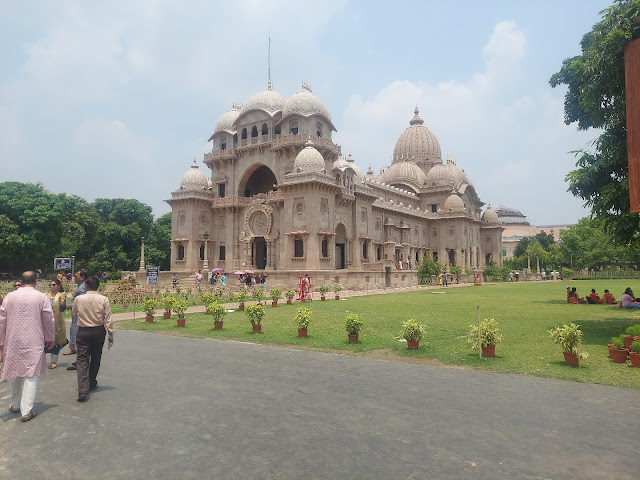
Towards the end, Badran shared some of his contemporary works which showed the constant struggle to balance his ideologies with his next generation of architects, including that of his own son. He urged the audience to believe in the potential of the hand over the mind of the computer. This conviction comes across very strongly through his method of working. The vertical buildings that his office now handles too show signs of breaking down the monumentality into smaller fragments – perhaps to achieve a certain territoriality, a feeling of emergence from the ground. It seems he maintains it through his representation – the non changing browns of his sketches echo a certain connection to the soil.

Badran over the next two days interacted with students at Academy over his sketches. His dialogues through sketches re-established into the young minds, a love for drawing as well as their own contexts. 

Drawings

Monday, January 23, 2012


Techno Cultural Schisms


Today morning as soon as i entered office i saw parmeshwar and we involuntarily struck off a casual conversation. He passing told me that he forgot his mobile phone at home. As he was leaving, he remembered something and turned back. He asked me if he could borrow my phone to make a call at his home. Initially i felt he wanted to inform his parents that they must not call him during day in case they wanted to contact him. But he went on saying later that he must inform someone at his him to switch off his phone.

I offered him my new touch screen Samsung ace and he was perplexed. He honestly and boldly requested me to dial his residence number passing a quirky remark on 'touch screens'. I enjoyed it. He waited patiently for his mother to pick up and respond. As soon as his mother picked up, she herself reminded him of the fact that he had forgotten his mobile at home. Going on further he asked his mother to switch off his phone. He waited for his mother to get his phone and then began: "press the button on top left and the bottom left...', and then kept on repeating... Although his mother tried hard, she couldn't figure it out. He went on explaining her to press the 'red' button. She didnot register. Paro silently gave up as if he already anticipated his mother's failure. He concluded suggesting her to get it switched off from his father.

This is the story of our struggle with the technological revolution. We crib, talk, try, cry and adjust with technology. We use universal references like top, bottom, red, white, etc to make others understand about it. These references too fail. The idea of serial pressing and operations donot work. Manuals of technical languages for operating gadgets fear away the older generations. The older generation would have been happier if they only had to press a single button. Or just pick up a call like that on the landline. For some.like marketing people, such struggles become USPs of their innovated products that resolve some cultural issues in technology. Others build up on agencies that can demonstrate to them...

Inspite of all this, i think we can only get to the next level of technology digesting the half baked developments in this sector.
 

Reader Number